I have been peeling back the layers of my relationship with my emotions because somewhere in our unspoken training for societal acceptance, I learned to judge my emotions. I don’t remember the exact lesson or what experience it took for me to learn that anger isn’t good to express, that fear makes you look feeble, or showing raw emotion manufactures the idea that you have too many of them, but those lessons have stuck with me and I am doing my best to look at them in a different light.
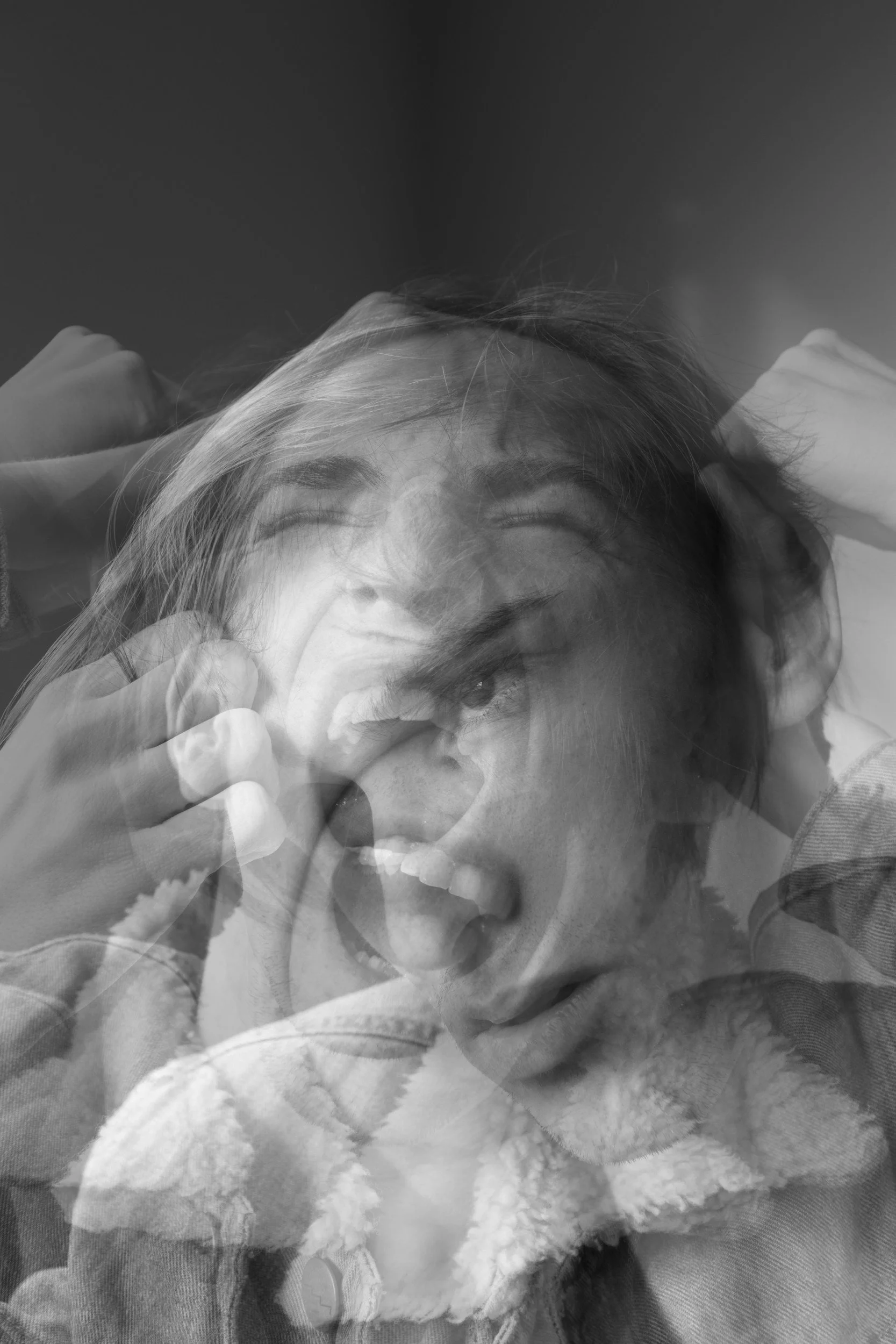
Over the years I have found that my sadness is there to show me something I am not coming to terms with, my anger helps motivate me into action, my excitement proves to be a magnet drawing me to the things that light me up, and confusion invites me to listen deeper.
None of these emotions are intrinsically working against our highest good. I've come to see them as energies that influence our perspective, our choices, and how we live our daily lives.
Our emotions are guides. They become tools of mentorship, pushing and pulling us toward different opportunities, relationships, and circumstances. Their language is feeling, and it’s your job to learn to interpret it. After all, you are the only one that feels them the way you do. Each of our mind-body connections produces a unique relationship with our emotions.
It’s fun to personify them as you get to know their energy. What do they like to wear? What is their name? You can even give them ruling planets that match their personalities: Confusion lingers with Neptune, anger is disruptive like Mars, happiness feels like Venus. You might want to associate a tarot card with them to decipher their complexity at a deeper level. As you research the layers, shadow, and illumination of the card that feels like that emotion, you might even find a little advice waiting for you.
Instinctively, we don’t want to hate other humans. Giving our emotions more depth allows us to understand them better. We can pull back our disdain or favor for each of them and see them for the wisdom and guidance they have come to give us. But getting to know the personalities of our emotions has also made me curious about their nature. Not just what they have come to teach us, but why they show up the way they do in the first place.
I started to see a resemblance between them and a simple flinch, almost like I was catching a glimpse into where they came from, or possibly, what their ancestry is rooted in.
A flinch is a physical reflex or involuntary movement. In my love for the law of polarity, I had to ask myself what’s a flinch’s yang? If a flinch is physical, what might its intangible counterpart be? Mental? Psychological? Spiritual? Could an emotional impulse be a kind of mental reflex? Could our emotional impulses be distant relatives of a flinch?
And now you ask, why does the lineage of emotional responses matter? Because understanding where anything comes from gives us a clearer picture of what we’re working with or building a relationship with (especially ourselves). And if our emotional responses are related to a flinch, it's easy to see how our initial emotional impulses can come as a form of protection or a survival response.
It seems like there is a precise moment where we treat these cousins as strangers and approach them drastically differently. That moment is the split second after we feel the initial shock of the reflex pulsing through our subconscious. With a flinch, we assess the threat and take action appropriately, but with an emotional impulse, before we process what landed like an attack, we hold that initial feeling as truth. While there can be truth to it, it’s not the whole truth.

Sometimes when we flinch, we laugh it off because it was the shadow of the bird flying over us that made us think something was coming at us. Similarly, we might be able to laugh off an emotional impulse that made us feel slighted or hurt because we realize the person on the other end of this scenario had just tried to make a joke that didn’t land.
Every feeling we have comes from our own memory bank of experiences. This season reminds us of how primal we innately are as human beings. We don’t have control over the magic that thrives in the subconscious of our brains, or in the divine nature of the automatic functions of our bodily vessel, but we do have the ability to connect with it, understand it, and be awakened to the messages, guidance, and truth that comes from it all.
Some soul contracts bring certain people into our lives to learn things like patience, or unconditional love, or self-control. I believe that the mind and body that our soul chooses for this life come with a unique factory setting that aligns with the various soul contracts, as well. We don’t just have people here in this life to help us ascend and alchemize our karmic lessons; we have a vessel and a mind that come with their own lessons and knots to untangle. Sometimes untangling them is as simple as getting to know them.
JOURNAL PROMPTS
✍️
JOURNAL PROMPTS ✍️
Where does this emotional reaction come from? Is there anything this emotion is trying to teach me or tell me?
Which emotion has taught me the most throughout my life? How has it helped me evolve and mature as a human?
What are my three to five most frequently visited emotions? Which tarot card would I associate with each of them? As I explore the meanings of these cards, what advice resonates with me that I can apply to my relationship with each emotion?
If I dropped all judgment of my emotions, which emotion might I express more often? Why?